Propaganda invests in proprietary AI platform

We are investing a six-figure sum in a proprietary AI platform, developed in partnership with Audacia, to transform over three decades of strategic intelligence into a scalable engine for value creation. 

This is not an off-the-shelf AI solution. It is a purpose-built system designed to interrogate our archive of real-world brand transformations -unlocking patterns, challenging assumptions, and strengthening decision-making at speed. 

For 30 years, we have worked alongside leadership teams and investors to build brands that drive growth, margin, and exit value. This platform allows us to protect, interrogate, and scale that intelligence -augmenting our consulting team, not replacing it. 

By integrating our proven frameworks with advanced AI architecture, the platform activates thousands of proprietary insights generated across sectors. It enables us to pressure-test positioning, sharpen strategic choices, and accelerate value creation with greater rigour and confidence. 

As Managing Director Craig Harrold explains: 


“For 30 years we’ve built a body of knowledge around what actually drives brand growth and valuation. Not theory, but real-world transformations across sectors. This investment allows us to protect, interrogate and scale that intelligence. Augmenting and enhancing our consulting team, process and impact. As AI continues to reshape the consultancy landscape, our position is clear: intelligence should be re-engineered, but judgement remains human.” 

We have partnered with Audacia to engineer the platform. A technology consultancy trusted by organisations including Honda, O2 and Saint-Gobain, ensuring it is built with the robustness, governance, and engineering discipline required for high-stakes environments. 

As Philip White, Managing Director at Audacia, adds:


“There’s a lot of noise around AI adoption right now. What impressed us about Propaganda is their clarity of purpose -they’re not looking to replace strategic thinking; they’re looking to augment and compound it.” 

This investment reflects a clear belief: in a market increasingly driven by data and automation, competitive advantage will come from those who can combine proprietary intelligence with human judgement. 

Influencer Marketing Isn’t Dying – It’s Growing Up  

Influencer marketing isn’t in a decline, it’s being redefined. Propaganda’s Social Media Director, Natalie Sharples, shares her perspective on what’s driving that shift and what brands need to do next.  

Influencer marketing has been declared “over” more times than most channels in modern marketing. But the reality is far less dramatic. What’s actually fading is the unmeasured, hype-driven version of it. 

For too long budgets have been allocated based on optics: follower counts and surface-level engagement metrics dressed up as performance. Creator partnerships have also been treated as one-off media buys rather than as part of a broader, accountable growth strategy. 

The consequences of this approach are becoming increasingly clear:  

Reporting that feels ambiguous instead of decisive. 

Budget scrutiny instead of budget expansion. 

Stakeholder conversations focused on cost, not contribution. 

At the same time, the landscape has changed; audiences are more commercially literate. Saturation is no longer a future risk; it is the current reality, and trust is no longer automatic. This is precisely why structure matters more than ever. 

When influence is rented for a moment rather than built through alignment, confidence begins to erode, both internally and externally. When creator activity operates in isolation from wider media strategy, it becomes difficult to measure, harder to optimise, and nearly impossible to defend. 

This doesn’t mean scale is irrelevant, or that every influencer partnership needs to be long-term. Large creators still drive cultural moments and campaign bursts still have value. But without integration and accountability, even the strongest creative ideas struggle to deliver sustained value. 

The question isn’t “Does influencer marketing work?”  

It’s, “Have we built the framework to understand how and why it works – and how to scale it responsibly?” 

What is beginning to emerge is a more mature model, one where creators are not treated as isolated channels but are embedded within the broader performance ecosystem. Their impact is measured through clearer attribution, amplified through paid media, tested systematically, and most importantly aligned with overall growth strategy. 

Structure, in this context is not about stripping away authenticity, it’s about protecting it and giving it the conditions to scale.  

This is not the decline of influencer marketing. It is a shift in how influence itself is understood, as no longer something brands simply buy, but something they build. 

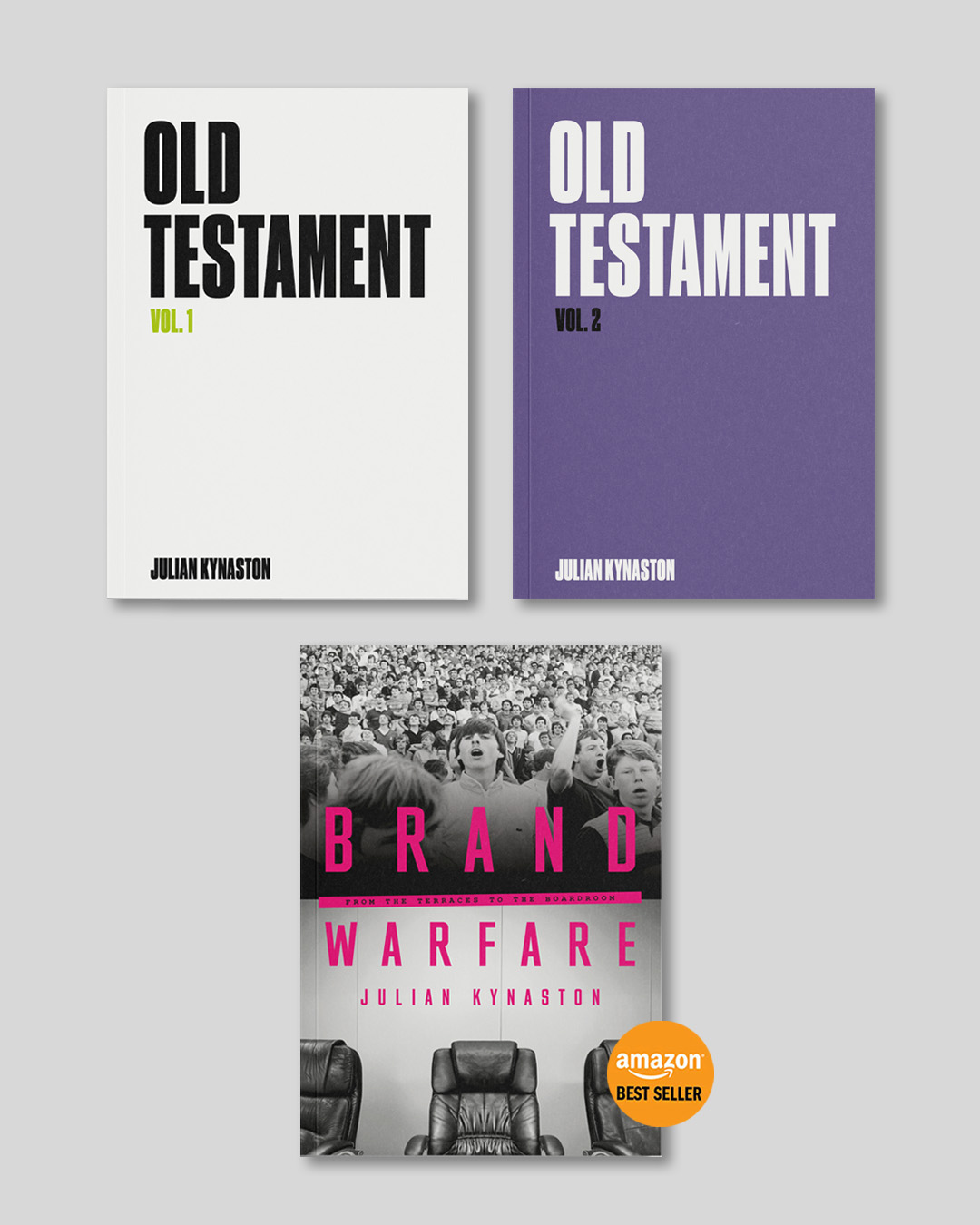
Old Testament Volume 2 is out now!

The second volume of the Old Testament from Propaganda Chairman Julian Kynaston is now available.

Drawn from widely read LinkedIn posts, the book explores the beliefs, battles and breakthroughs that have shaped decades of creative strategy – from refusing pitches and challenging “best practise” to navigating AI, visceral branding and strategic discomfort.

Part manifesto, part field guide, it’s written for anyone building brands, running agencies or questioning the status quo.

Order your copy here: https://shop.propaganda.co.uk/products/p/old-testament-vol-2

The Content Calendar is Killing Your Brand

Content calendars, posting quotas and rigid strategies are holding brands back. Social Media Director Natalie Sharples shares her view on why this approach falls short and what it takes to build something more meaningful. 

Creating a brand world online is no longer a future-facing ambition. It’s the current standard.  

And yet, many social strategies are still built on outdated foundations: a fixed number of posts per month, follower growth as the primary performance metric, and jumping on every national awareness day in the calendar.  

Meanwhile, the brands actually winning on social media aren’t thinking in posts. They’re thinking in identity. 

Nowhere is this more evident than the beauty industry, where brands have long understood the power of self-expression. Makeup isn’t just a product – it’s personality, community and belonging. The same applies to fashion, you don’t just wear a brand – you signal something about yourself.  

This mindset is now shaping a new generation of brands across categories. The most effective players aren’t simply “posting content”; they’re curating a lifestyle, a mood, and a point of view. Their social feeds feel like worlds you step into and want to be a part of.  

Social media should not be treated as a distribution channel for marketing messages. It should be the most expressive extension of your brand. 

This means moving beyond the idea that success is tied to volume – hitting 12 posts a month, maintaining a rigid posting schedule, or chasing short-term engagement spikes. Instead, it’s about building something people actively want to share, because it reflects who they are. 

When social becomes a vehicle for identity, community grows naturally, advocacy becomes organic, loyalty deepens, and “cult-like” customers emerge.  

To get there, brands need to wave goodbye to rigid posting quotas and reactive trend chasing.  

In their place, brands should focus on cultivating and nurturing communities through a clearly defined brand identity – expressed consistently and creatively through social.  

Because the brands that succeed on social aren’t necessarily the loudest.  

They’re the most lived. 

Propaganda founder Julian Kynaston releases second book 

Julian Kynaston, Founder of Propaganda, has released his highly anticipated second book, The Old Testament Volume 1. 

Over the past three decades Julian has built Propaganda into one of the UK’s most distinctive brand consultancies – challenging conventional thinking around brand strategy and consistently focusing on commercial outcomes. During that time Propaganda has helped transform businesses across sectors, played a pivotal role in scaling brands such as ghd to global success, and created the cult beauty brand Illamasqua

The Old Testament Volume 1 offers a candid look at the thinking that has shaped Propaganda’s approach. From saying “no” more often than “yes”, to rejecting pitch culture and prioritising work that genuinely moves the dial for clients, the book explores the beliefs and principles behind one of the industry’s most unconventional approaches to brand strategy. 

Drawn from a series of widely read LinkedIn posts that generated more than two million impressions, the first volume captures an unfiltered perspective from inside the agency world. Sharing the beliefs, battles and breakthroughs that have shaped Propaganda over the past thirty years. 

The book covers: 

From terraces to boardrooms – Julian’s journey from youth subculture to trusted brand advisor and how conviction, credibility and lived experience shaped the way Propaganda approaches brand strategy. 

Why pitching is broken – A clear-eyed critique of agency pitch culture, and why Propaganda made the decision to stop pitching altogether, proving that stronger, longer-term client relationships can be built without compromise. 

Strategy before creativity – Why great brands start with knowledge, not assumption. The book explores Propaganda’s knowledge-first approach and how strategic clarity creates sharper ideas and stronger commercial results. 

Why agencies need gravitas – If agencies want to reach the boardroom, they need to speak the language of business. Julian argues that brand thinking must carry commercial weight – not marketing jargon. 

Creative disruption wins – From sector neutrality to building brands from scratch, Julian explores how Propaganda approaches creativity differently, treating brands with the same originality and cultural edge as great bands. 

Whether you’re building a brand, running an agency, or simply questioning the way the industry works, The Old Testament Volume 1 is a manifesto for strategic clarity, creative courage, and doing the hard work that genuinely moves the needle. 

The Old Testament Volume 1 is available here: 
https://shop.propaganda.co.uk/products/p/old-testament-vol-1 

New brand strategy and creative for ASCO 

Following a 100-day Brand Discovery™ process that began in January 2025, Propaganda developed a bold brand and creative strategy to help ASCO accelerate growth across new and existing markets, leading to the unveiling of its new identity in December 2025 across 21 locations in 9 countries and 5 continents. 

With deep expertise in complex energy operations, ASCO has evolved into a leading logistics, materials and operations management specialist for the high-risk industries that keep the world moving. Seeking to accelerate growth and stand out, ASCO partnered with Propaganda following an introduction from their investors, Endless LLP, for whom Propaganda has delivered a history of transformational work. 

The rebrand was shaped by extensive research and in-depth interviews with ASCO’s internal team, customers, suppliers and the wider industries the business serves. Our Brand Discovery™ revealed a powerful point of difference: ASCO’s rare ability to both consult and implement. Where competitors typically offer strategic advice without delivery, or operational execution without strategic thinking, ASCO does both. 

This insight became the foundation for ASCO’s new brand proposition: ‘Frontier Thinking’. Blending meticulous planning and impeccable delivery, ‘Frontier Thinking’ reflects ASCO’s ability to operate at the edge of complexity, ensuring high-value projects never stop moving. 

This resulted in a confident rebrand that positions ASCO as a new class of partner and a clear industry leader. Propaganda’s scope of work included a new brand identity, corporate brochure, corporate presenter, brand film, new global website, refreshed imagery, tone of voice and messaging, and an initial social media strategy. 

Fraser Stewart, CCO at ASCO said, “We came to Propaganda with high expectations, and they have exceeded every single one – with a commercially grounded, strategically astute, and creatively inspiring output. We need the world to know and understand the value we can deliver to large-scale, complex programmes – unlocking real value for the stakeholders and the communities they serve. This will involve taking our hard-earned reputation within our heritage markets into new industries and geographies.” 

Check out ASCO’s brand new website: https://ascoworld.com/